KayaBiz interview with Gugulethu Mfuphi and Dr Theuns Mans – Wealth creation segment

Your Business Isn't Your Retirement Plan
22 JUN / WEALTH CREATION WITH KAYA 959
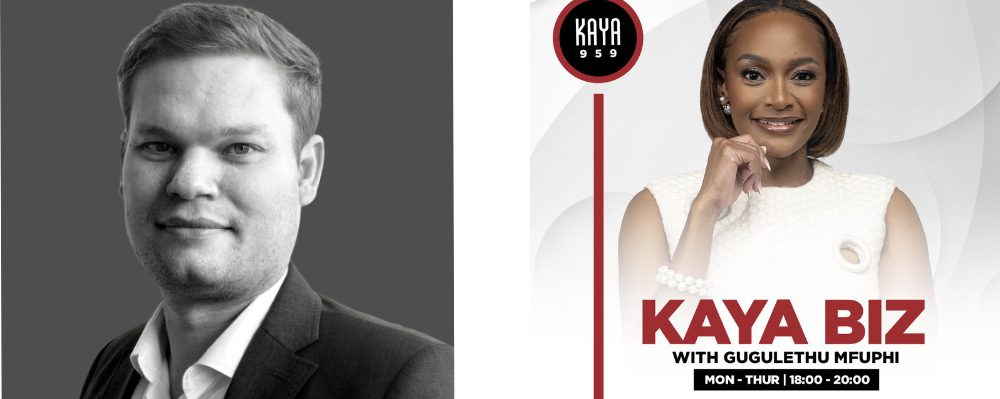
Gugu: On Wealth creation tonight, we are joined by Dr. Theuns Mans, he is the managing director of Novare, Wealth & Invest. Dr. Mans, thank you so much for your time this evening and for your patience with us. There's a lot on the going for us to discuss on a critical matters regarding how business owners should also prioritise wealth creation for themselves. And maybe let's just start there, right? Typically what we do see, when it comes to entrepreneurs. What have your observations been in terms of the approach to not only building businesses, but prioritising wealth creation in the building of these kind of businesses?
Dr Mans: Good evening, and thank you for having me tonight and good evening to your listeners as well. My observation is mostly that, sadly, a lot of entrepreneurs, they build a great business, but neglect this part, you know, creating wealth for themselves. And the thing is, there's a lot of risk associated with, you know, the continuity of a business. So you build this great business, but somehow it must continue after you retire. And this is especially true in the SME market. You know, an SME, for example, the founders typically are the business. The business is tied around the founder. And when they founder departs, retire, for example, the valuation tends to also drop off the business. Now the problem of this is, if your retirement plan is based on the value of your business and the value of the business is tied around you as the founder, for example, relationships, then you have a problem. You don't have a very good retirement plan. And I see this so often. And it's actually, it's nice to see the passion of entrepreneurs for their business, but this part gets neglected a lot.
Gugu: Oh, yes, you can say that, I guess a 1000 times over, right, Dr. Mans, because the belief is that I'm going to put all my resources, all my energy, all my effort into building this business, and this business is what's going to make me wealthy at the end of the day. But that doesn't happen without adequate planning. Where do we fall short or what themes do we need to reconsider as entrepreneurs to prioritise bootstrapping, yes, but also long-term investing and saving?
Dr Mans: Yes, so the funny part of this is as well, you know, I see entrepreneurs, they don't like, you know, the normal retirement annuities and saving plans. Like you said to yourself, you know, invest all our time and effort and money into our business. And I think that's probably, you know, when you bootstrap, that is the mind-set and that's a correct mindset to have. But, you know, one common mistake I see, and I think this is easy one to fix early on, is estate planning and structuring. You know, with proper estate planning and structuring, you construct your business sort of away from you. And what I mean of structuring, I mean, like, where do I host this business? Do I host in a family trust? Is it in a company structure? Is it the partnership? What is this business? And where I'm going with this is, again, you must have this mind-set. If I departure, someday I'm going to departure from this business. I'm only going to die, or I'm going to retire. One of those 2 will happen to you. and what's going to happen to your business. So you must start to develop this mind-set, and then we can start, look at themes, like, right, let's start now focussing on retirement planning, so, you have retirement annuity. Do you have a savings plan, whatever fancy you, you know, I see a lot of entrepreneurs, they like to diversify, not only in normal retirement annuity, but it is because they sort of see it as boring. You know, they want the action. They want the stuff that they really like. It's what I versify and property offshore. What you fancy, what you like. The point is, just get your foundations correct in terms of structure your business, structure it away from you, and get away from that founders mind-set of building business around yourself. That will really help with retirement planning.
Gugu: Hey, this is such an important one, right? And it feels like you're preaching to the choir Dr Mans. Many of us like can relate. And I think this is an important part, right? At what stage do entrepreneurs need to think this way, and fully grasp how they need to separate themselves from the business as a juristic person in and of itself? It almost seems as though we wait for a particular moment of, you know, size, scalability, revenue stream, profit target, before we say, okay, now the 2 can be separate, but that shouldn't be how it is, right? So in other words, how should we approach it?
Dr Mans: Look, ideally, from day one, that will be ideal, but then again, you will come to me and say day one, I don't even know if this concept works. I don't know I can get funding for this business. So how can you now talk about structuring and all this trust stuff? But why do I say ideally as soon as possible, not when a business is hugely successful, because obviously there's cost involved. You know, if you want to structure a business at a later stage, there's taxes to consider, and obviously some legal cost for contract drafting, et cetera, et cetera. So the point blank answer here is as soon as possible. And the sooner the better.
Gugu: Yeah, the sooner the better. What does that look like as well in terms of disclosures? And I ask this because I imagine as a wealth manager. You've sat opposite many a client with a complicated lifestyle. So what does that look like in terms of the conversations one needs to have with their wealth manager, financial advisor, and financial practitioner who can assist them?
Dr Mans: I need to know everything. Everything financially, I need to know it. It is so important. Let me give you an example. I help clients a lot of structuring, structuring their estate and the business interest. You know, typically where a client as a huge and successful business and now they say, oh, shucks. I need to structure this from a tax perspective, but also I want to be live away from it because I want to retire someday. And then I give me some information, right? I have this business, and this business, and this is how it fits together, and let's put a trust on top of all of this or holdings company. And then 3 months later, true story is, it comes out, oh, but by the way, I also own this and this and this. And then the plan doesn't work. So your financial planner, your estate planner must know everything. This is so important to really do this job thoroughly. This is not a guy to hide stuff from.
Gugu: Oh yeah, 100%. I'm glad you mentioned it. As you say, hiding, Tax efficiency and tax planning came to mind as well, because we often think tax might be the straightedge monster, but there are tools and methods in place to, um, uh, legally uh, put tax avoidance structures, but as we know, tax evasion is completely illegal. But there are ways and tools to use, right? Dr. Mans...
Dr Mans: Tax planning, Tax mitigating. Let's call it tax mitigating.
Gugu: Got you. Tax mitigating. I like that one. Talk to us about it and how critical it is in wealth planning.
Dr Mans; Oh, it is so important, you know? There’s saying I like to use on clients. I say that poor structuring and estate planning erodes wealth over time. And this can be in the form of fees, but especially in the form of taxes. So if you're structuring in state planning is poorly set up or you hide certain stuff from your estate planner or wealth manager, obviously certain taxes will trigger, and in most cases, this is stuff like capital gains tax, donations tax, and obviously estate duty as well in the case of death. So, that erodes wealth. And what we like to do in our firm, we like to be seen as generational wealth planners, you know, planning for the next generation, your kids, your grandchildren, et cetera. But if your foundation is not, you know, laid correctly, and tax erode your wealth, what can be left for your, for your grandchildren, et cetera, et cetera. But if you lay this foundation correctly now, your fruit from your labour from this entrepreneurial venture you are on. If it's usually successful, if it works out, you sort of set up for life and your grandchildren as well, but do not erode your wealth with poor structuring and estate planning.
Gugu: Oh, you touched on it, and I think that's the important part, right? Because that's what wealth is about intergenerational transitions and transference and making sure that it is sustainable for the long term. So for any entrepreneur that's listening right now, Dr. Mans, where should they start? What should they do? Even if they do have a will in place? That's not the only aspect of adequate estate planning. So, what kinds of considerations should we keep top of mind for the entrepreneur that's listening?
Dr Mans: I'm so glad you mentioned the will. You know, I think, will, is probably one of the most important documents you will ever sign. And a will goes hand in hand, with this structuring exercises, just unspoken about in estate planning. Because obviously in your will, you will dictate certain stuff, how you bequeath your assets to heirs, et cetera. So my advice to entrepreneurs, listening will be to first take stock of where you really are in life in terms of your own business. And again, back to my early advice, the sooner, even yesterday, you can, you start with this type of conversations and exercise the better. Get yourself a competent wealth planner. What is a component wealth planner? This is someone that understands taxation, with a little bit of legal background because this is more a, a structuring and legal exercise within a year, in terms of taxation, et cetera. And then, honest conversation with this person that really opened up to this to this person, because in the end of the day, we need to solve a problem. And what is your problem? Let's say the problem is, for example, generational wealth planning. I want to plan for my grandchildren, with the successful business. How can I get to that point? And that's an honest conversation to have with someone competent in that person, should ask questions. You know, sir, I want to know exactly how your state with assets and liabilities is. Tell me your tax liabilities, et cetera, et cetera. And from that conversation, usually a lot of stuff is born from that.
Gugu: Got you. And I'm so glad you mentioned that because it comes with that transparency, that discussion that takes place, which also speaks to succession planning, that entrepreneurs need to think about when it comes to the organisations. I mentioned this because just recently on my travels, we focussed on a lot of founder led businesses and a lot of them are still holding on so tightly to the businesses that they don't want to let go. Meanwhile, that's actually where a lot of the growth might come from is in recognising that succession planning is just as critical and understanding how that too ties into their wealth planning. Your thoughts on that Dr Mans, I can imagine you've interacted with quite a few entrepreneurs who would much rather stay at the helm of a business, even if it is, to its compromise, or detriment.
Dr Mans: I understand it completely because remember it's your baby. You know, you've made what it is today. A successful business. So it's understandable, but letting go is not necessarily, you know, letting go in the sense of you let the business go and you're not part of the business anymore. It is a different way of thinking about this. The business is now successful. And I think it starts with asking yourself a question. What happens, you know, when I die tomorrow, I retire tomorrow? Will this business die with me and retire with me in the sense of, let's take my example where relationships were formed around you. You have the relationship in a certain firm with all the suppliers or if you're using the business and when you are gone, they are not there anymore. They're gonna die with you. And I think it's an honest conversation to have. You don't have a business. You have something else. You have a job, not a business. A business is something that you know you have a successful business. If you go on holiday for 6 months and the business has grown without you, then you have a successful business. So, I don't necessarily think it's a conversation of letting go of a business, just a conversation of having a different mind-set and starting to trust other people in the business with that continuity. You know, taking control over certain things and directors in certain positions. And uh, just what I'm trying to say, again, you guys, you know, that's a great retirement plan because then you have a business that's sellable, because the moment you want to sell a business, think about it from a different perspective. What are you looking at when you want to buy a business? You're probably going to look at a cash flow, the profitability. But if I tell you, if the founder retires, you know, the business will be in the red. It's not profitable anymore. You not going to buy that business. So, the moment a founder thinks like that, everything changes.
Gugu: Oh, I love it. Dr. Mans, I guess the one thing entrepreneurs should not do is nothing because that just makes it worse. So speak to a financial advisor, wealth planner, just do something, right? Uh, to get the ball rolling. Would that be correct?
Dr Mans: Exactly. That's exactly, that's the truth.
Gugu: Perfect. Such a pleasure speaking to you, sir. I thoroughly enjoyed this conversation and helping many more entrepreneurs take this incredibly seriously. Thank you again for your time.
Dr mans: Thank you so much.
Gugu: Thank you, Dr. Theuns Mans. Managing director of Novare Wealth and Invest. And such an important conversation, right? Because we build these amazing businesses in whatever sector that you might be in. We want to enjoy the wealth. You want to ensure that it offers you an opportunity to make an impact in society as well. But life happens. Death is not only a certainty, but there's also real life circumstances that change things, and that's where we need to be mindful of how it is that we prioritise estate planning. Adequate tax efficiency or tax efficient planning is also critical because that's also where you make sure that you get your ducks in a row. Quite frankly, get everything in order to make sure that there's an opportunity for you to navigate the complexities of financial instruments in South Africa. But share your thoughts with us. 063-688-0959. And I'm hoping that as an entrepreneur, you realise that no business is too big or small to make sure that you have your estate planning in order. Make sure you have a will. Understand that you're saving for long term. Yes, you can bootstrap and take money out of your pension to start your business, but at some point, you need to make sure that your pension and long-term savings are also taken care of. But share your thoughts. Most importantly, share some perspective you might have from your engagements with a financial advisor or wealth planner. It's just after 7.30. Kaya Biz. Monday to Thursday. 6 to 8 p.m. Kaya 959.