

100 days after the disruption to shipping through the Strait of Hormuz, financial markets have largely transitioned from the initial shock phase to one of adjustment. The result is a higher but still manageable energy price environment, with inflation and interest rate expectations proving more persistent than previously anticipated.
Brent crude has averaged around $101.50 per barrel, while OPEC production has fallen to approximately 20.6 million barrels per day. Supply disruptions remain manageable, although spare capacity is concentrated among a small number of producers, leaving markets vulnerable to any further escalation.
Globally higher oil prices have slowed the global disinflation process and reinforced the "higher for longer" interest rate outlook. Expectations for aggressive monetary easing have diminished, supporting the US dollar and maintaining upward pressure on bond yields. Subsequently, investor preference has shifted toward defensive assets, commodity producers, and businesses with strong pricing power. At the same time, more cyclical sectors have faced greater pressure.
Locally, South Africa has felt these effects through higher fuel costs and rising inflation. Consequently, expectations for significant South African Reserve Bank rate cuts seem all too gloomy. South African bond markets have also adjusted. The 10-year government bond yield has risen back toward 8.72%, while long-term inflation expectations have moved to approximately 4.5%.
Amid ongoing geopolitical tensions and heightened global uncertainty, traditional safe-haven assets such as gold have been less attractive than many investors anticipated.
Although South Africa received its first Fitch credit rating upgrade since 2005, broader economic challenges continue to weigh on local retailers, property companies, and consumer-focused businesses as household spending remains under pressure.
As a net exporter of resources, South Africa has also been affected by the recent downturn in the resources cycle, which coincided with the onset of the Hormuz conflict and added further strain to the domestic economy.
The path ahead remains dependent on developments in the Middle East.
A gradual easing in tensions would support lower oil prices, improved inflation outcomes, lower bond yields, and a more favourable backdrop for domestic cyclical sectors.
Contrary, a prolonged disruption or further escalation could result in renewed upward pressure on inflation, higher bond yields, and slower economic growth. In such an environment, defensive assets, commodity exposure, and offshore earnings should continue to provide resilience.
Current market conditions reinforce the importance of maintaining diversified portfolios across asset classes, sectors, and geographies. The ability to actively manage risk becomes increasingly valuable. Hedge fund strategies can play a pivotal role during periods of heightened uncertainty by providing differentiated sources of return and reducing reliance on traditional equity and bond market outcomes. Through flexible asset allocation, tactical positioning, and the ability to exploit opportunities across market cycles, hedge funds seek to preserve capital and mitigate downside risk when volatility rises.
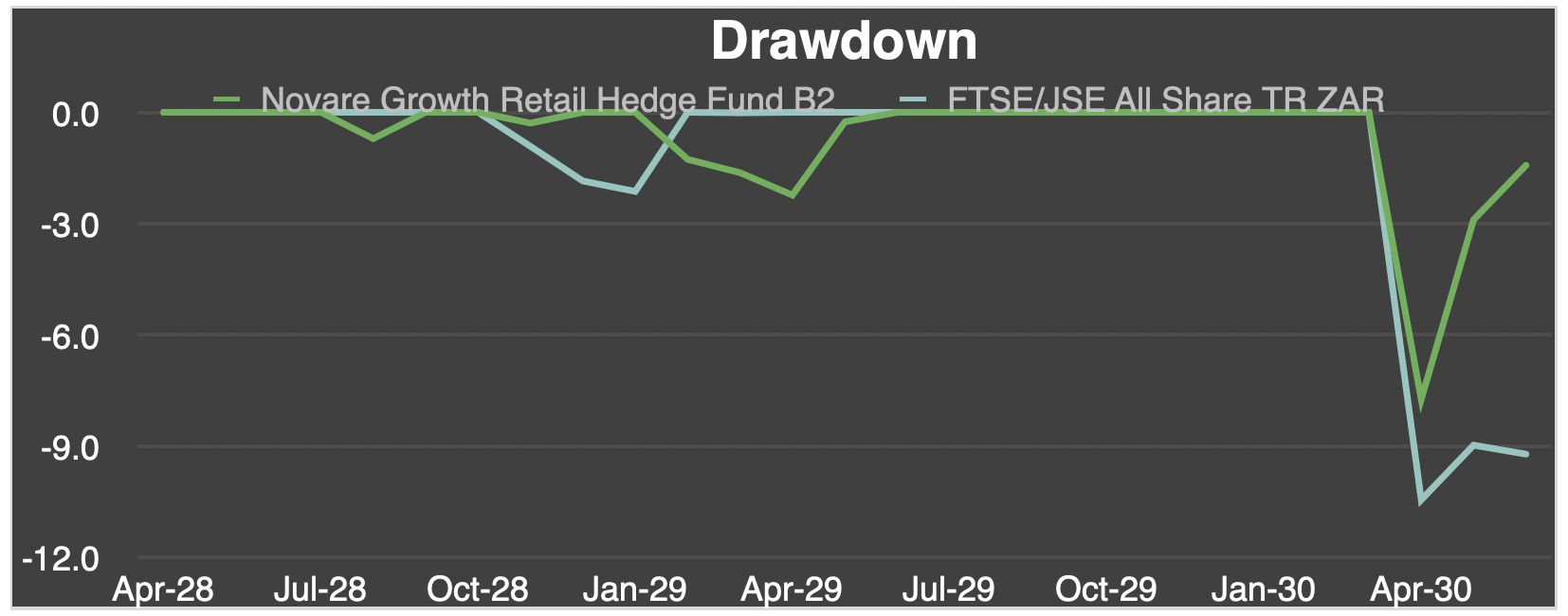
The benefits of active risk management are evident in periods of heightened market uncertainty. As illustrated below, our Novare Growth Retail Hedge Fund B2 has demonstrated greater resilience than the broader JSE All Share Index, highlighting the value of a hedge fund approach in preserving capital and mitigating downside risk during volatile market conditions.
While the Strait of Hormuz’s conflict has increased volatility and placed pressure on households, it has not changed the principles that underpin successful wealth creation. Maintaining perspective and remaining committed to a well-constructed investment strategy with multiple avenues remains the most effective response to an uncertain environment.
Prepared by:
Craig Leach, Wealth & Investment Adviser

In collaboration with

For more information about this article please contact us