

KayaBiz interview with Lerato Kumalo – Careers Corner
 KayaBiz
 Lerato Kumalo
Reinventing Your Career Without Starting Over
24 AUG / CAREERS CORNER WITH KAYA 959
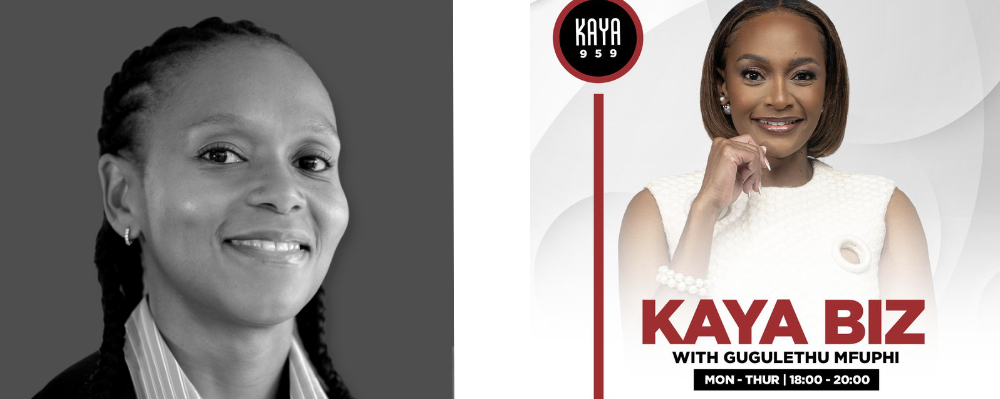
Kaya FM interview with Gugulethu Mfuphi and Lerato Kumalo on Kaya Biz, the careers Corner Segment.
Topic: Reinventing your career without starting over and the Importance of ESG
Gugu: We are officially into the 2nd hour of the show, and as you've heard, deep diving into one of the themes and conversations I thoroughly enjoy. Careers corner. And consider this. For many of us, we work in spaces, occupy roles and functions that perhaps didn't exist 10 years ago, 20 years ago. And did I say were potentially just a dream 3 decades ago. But these days when we reflect on environment, social and governance. They all typically are very closely aligned to themes like sustainability and impact, and at times those particular words and phrases are used interchangeably, though they certainly mean very different things. Tonight, we're going to speak to someone who plays within that particular space, and largely when it comes to the allocation of capital, and making sure that that capital also speaks to the ESG and impact strategies of the businesses that they align with, but also of the investment house that she is a key player and partner in. To give us some perspective, we joined by Lerato Kumalo, Chief ESG and impact officer at Novare holdings. Such a pleasure to have you with us, Lerato. Welcome to the show.
Lerato: Hi Gugu, pleasure to be here. Thanks for having me.
Gugu: I am excited to speak to you, ma'am, because you have a job that, as I mentioned, perhaps many of us didn't think about practically just over 10, 20, even 15 years ago, but when you describe your role and function as chief ESG and impact officer, what would you say are the top 3 qualities or characteristics that you prioritise on a daily basis?
Lerato: Sure, um, I think one of the key things is to be able to juggle many things at once. So on the one hand, you've got governance issues. So being able to deal with regulatory issues, um, you know, being able to deal with various reporting frameworks, um, But on the other side, also having an understanding of uh, business, business processes, associated risk on those businesses, as well as looking for opportunities, um, and being able to optimise those. And then it's also dealing with people. Um, meeting timelines, um, and bringing all that together to be able to have a clear strategy um, that is sustainable for, for an organisation.
Gugu: Definitely. And these are so critical, right? Because they actually do speak to, again, sustainability, which actually focusses on the long term in terms of what we're trying to attain for our communities, environments, and our countries at large. Maybe let's underscore why this matters just as much as a return on investment or internal rate of return when people typically speak in investment themes.
Lerato: Yeah, um, so like, as you say, you know, sustainability is really sort of the why, um, and as it's called, really encompasses, as you say, long-term viability of organisations, operations, and, um, taking into account the environment, the social and economic impacts of the work that we do, um, or the investments that we go after or look after. Um, and really looking at these 3 dimensions really recognises the fact that, um, we cannot thrive economically if we don't also consider how to positively contribute to society and environment at the same time. So we're constantly having to look at what it is, the impact of we're having on our environment, the internal impacts environmentally as well because there's internal systems to consider as well. Socially, what are we doing in terms of uplifting the communities within which we operate? Um, the people we work with, um, governance issues. You know, what kinds of systems we have placed in order for us to be effective, poor long-term sustainability. And ultimately trying to manage our impact on the environment, so the future generations can continue to benefit from the world that we've created.
Gugu: You touched on something so critical, Lerato. And I think you can tell I'm getting excited in my seat right now because ESG across the globe can mean very different things. In markets like Europe, there's a strong focus on environmental efficiencies and sustainability. But in a continent like Africa, where we have a very youthful population. Majority of whom are unemployed. Individuals who still live below the poverty line. There's almost a greater waiting then on the S, including the G versus the environment, given where we are in terms of industrialisation. How are you seeing, I guess, ESG principles being adopted, rolled out and understood from an African point of view?
Lerato: Mm. And I think there's a lot of conversations that actually happens around that Gugu, uh, uh, mini a conference where, you know, African organisations, investors are saying the S is what's critical to us. We understand that global, we're talking about environmental impact, decarbonising, um, energy, um, you know, just energy transitions, but the fact of the matter is that ultimately people are at the core, um, of what impacts us, um, as investors. And it's very true. A lot of African investors look at where their ultimate impact will be, which is the people. Um, the people that we are um, working with, the communities that we serve, um, and we're trying to uplift. And that is why I think it's so important for organisations to consider the ultimate impact of the capital that they look after. Um, and in particular with regards to things like, um, you know, be it education, or healthcare, job creation, um, All of those are critical in the African environment for us to be able to grow economies, um, and be able to ensure a sustainable future for the youth, as you say. And I think hence a lot of focus on youth related funds, a lot of focus on education related funds. All really with the focus on that is, on how we can better or more positively impact on that S element being our society, the people at large.
Gugu: Definitely. Lerato, another theme that comes to mind when we look at the environment and ecosystem that you play in is typically the interchange of words like impact, sustainability, and ESG. Do they all fundamentally mean the same thing or should they be interpreted differently to understand the kind of, dare I say, impact for lack of a better word on business, right?
Lerato: Yeah. Yeah, and you're quite right. They often used quite interchangeably, but they are slightly different, although very much related. So sustainability really is vision. Ultimately, you know, a long-term vision of what it is that we want to be able to achieve, and ESG are the tools, the how we do it, right? How we monitor environment, social issues, what governance instruments we use to be able to ensure that we can attain the vision that we want long term. And that's really just in terms of ultimately the impact that we're going to have long term. So if we look at, for example, what the UN has put out, as you know, the sustainable um goals, um that is essentially the ultimate vision for for the global goals, I suppose, um, for all of us, is how do we get there? How do we eradicate poverty, how do we make more a better world that functions to benefit more of us than it does currently? And that's really just a vision of sustainability, um, and ESG and assessing ESG and monitoring it and ensuring that each of us are considerate, um, of the things that we do and how we do them, helps us to get there.
Gugu: Definitely. I'm so excited because this is why we have these kind of conversations unpacking careers corner and really reinventing career streams, themes that also do actually speak to the bottom line. And perhaps this is where Lerato I am hoping to, you know, just personalise the conversation slightly in terms of reflections of your journey, lessons in leadership. It's the fact that you typically focus a lot more on the built environment and that's really where your foundation started off from. As an engineering technician. You've worked in the construction and engineering space. And this now is also one of the sectors that has really played the lead or taken the lead in terms of driving ESG impact as well as sustainability. Give us some context on how this has been a theme that has evolved significantly in at least the last 2 decades.
Lerato: Yeah, um, so yeah, so my background is um, in civil engineering. Um, professional civil engineering technologist is, um, I suppose by qualification, um, and I've probably manoeuvred along the way to find myself in the sustainability role. Um, I think, yeah, I guess you could say that I've worked in the space for a while in the sense that, um, I think the built environment has to deal a lot with the kinds of impact it has on, on people and environment overall. We need to be able to deliver assets that are going to be useful to people. But at the same time, be cognisant of the fact that, you know, when you bulldoze down forest ribs, for example, to build a high rise, that has a fundamental impact on biodiversity, you know, on the environment as a whole, pollution, et cetera. And so closely related to where I've been. And so sustainability was a natural sort of progression, extension of that background, and looking more closely into that kind of relationship between the developments that we provide as well as how we invest in them and ensuring that there is sustainability for the future.
Gugu: 100%. I'm quite keen to understand. You obviously have occupied a few spaces where they typically, quote unquote, male dominated industries, and in light of August being women's month. I am keen for you to share your reflections on, I guess, gender inclusivity and perhaps gender parity within not only the built environment, but also the realm and the theme of ESG.
Lerato: Um, I guess you would say I entered into engineering at a time when, um, many technical environments were still overwhelming male. So there were certain occasions where I was very conscious of being one of relatively few women in the room. But over time, I've learned the most sustainable forms of confidence come from competence. So, you know, you prepare, you understand your subject, you contribute, eventually people know the value that you bring. Um, so yeah, I think it's, it's, it's evolved quite a bit over time. Um, versus when I started out. I mean, I'm reminded of a time when I was standing walking sites in gum boots, you know, mixing concrete, you know, walking through snow. Um, it's, it should be quite challenging. I mean, at time there was a time being on a site and there wasn't a toilet that I could use as a female. Um, and you start to realise that, you know, um, and maybe through no direct fault of, of the male counterparts necessarily, but because they hadn't been females that came before in that specific role, I suppose. No one had thought of this as an issue. You know, men can run behind a tree and relieve themselves. I'm a woman with particular, you know, hygienic needs when it comes to needing to relieve myself. And so you start to realise that you need to be an advocate for those that will come after you as well. So there have been times when, you know, as a female in the space, one has to be able to lead as a female and not necessarily, which is often, um, we also, uh, I suppose in some cases want to be like one of the boys, um, so that you, you can be a part of something, but I think you differentiate yourself eventually to be able to understand that if you don't do that, um, it will be harder for those coming after you to be able to find space. And so creating a space that is uniquely female within the context of a male dominated sector. Um, yeah, so, you know, and everywhere you go, there will always be. I mean, I think the working world is always created for men in general, regardless of the sector you're in. And so you come in there, you recognise the value that you provide and in that in a female way, I guess, and you learn from others along the way. I mean, there have been others who've had to sort of point with me in a particular direction along the way. But I think it's also, uh, you know, I think one has to give kudos to the males that you work with that are open to making space, uh, for women, um, and creating. Yeah, yeah. And I think that, you know, I've been very fortunate that Novare has a lot of forward thinking, futuristic men, um, who are always making space, um, and wanting to, to be better to learn, um, and to ensure that there, there is, you know, a place for, for all people, um, and a diverse space for, for all of us to thrive.
Gugu: Definitely. Lerato, I can imagine you speak at a number of conferences, some that I've had the pleasure of attending as well, like the API and so many others, where you're able to share your insights with an audience of individuals who sit at the table with you when these decisions are made, how to allocate capital, how to meet, the sustainability goals and objectives, how to measure these outcomes and avoid greenwashing as it's become. But it's often where the techie hits the tar that us as ordinary South Africans need to understand the kind of impact that these decisions do have on our day-to-day lives. And maybe, you know, as we start concluding our conversation. I'm hoping that you can make this tangible for our grandmothers who grew up in a time where cutting down a tree, you know, using that wood for fire and not concerned about the impact of that combustion and its influence on the environment would have. So maybe, you know, talk us through the key objectives as to why what you do matters for everyday lives of South Africans and Africans at large.
Lerato: You know, I think there was a time when Africa was considered, um, sort of the bread basket of the world, right? Every resource is very notable here. Um, agriculture, you know, huge potential for production to be able to feed not only ourselves, but a large portion of, you know, our neighbours and other continents as well. And that's slowly changed. And that's as a result of climate change, right? Um, and I think, uh, more recently, probably in the last 10, 5 years, I think the ordinary person can start to recognise what climate change actually means. The increase in floods, um, the strange weather patterns we've had to live through, um, you know, torrential rains, one moment, heat waves, the next, you know, sudden, you know, snowstorms, um, at the tail end of of winter. So I think from a day-to-day point of view, I think a lot of people are starting to understand that this thing called climate change is very real, um, that the world is not quite the way it used to be. And so it's important for us as investors. And I think as the directors of capital, to be very cognisant about where we put money, that ensure that as the world is changing, that we can make those changes, and our ability to be able to deal with those changes a lot more effective. So, for example, in a property space, you know, we need to still house so many people, South Africa has a long waiting list of people who are looking for housing. Um, and those people need to be housed in a way that is going to be a safe place for themselves, their families currently and potentially future generations, and we need to be able to ensure that the materials that we're using, um, you know, are sourced in a way that is not going to aggravate the impacts that we're seeing from climate, and that they're resilient to those issues. So things like flooding. How to ensure that less people are on that adversely affected by the kind of floods that happened in KZN, for example, by building well, ensuring that there is any end, by building in spaces and places that are safer for people. how to ensure that, you know, in agricultural practises that we can reduce harmful pesticides, so that people aren't exposed to serious illnesses, but also that the earth and the soil is continuously arable for us a bit, which you continue to plant and feed ourselves and our families and generations to come. Things like energy. Yes, our grandmothers used to, you know, go and chop down a tree. We were a lesser population then, and perhaps there was less of a fight for resources. And so one tree cut down, you know, in your backyard, probably had less an effect than, you know, 10,000 of us cutting down the trees in our backyard, you know? What does that mean for healthy environments and ability for us to be able to enjoy green spaces, for us to be able to pick a fruit, you know, avo, a peach, a mango from our own backyard. And so those things become increasingly important for us to consider. In every way, it could we conduct ourselves as people, but how we conduct ourselves as businesses. Because the truth of the matter is that everything we do has an impact. The question is whether we're deliberate about that impact and do we know what that impact is? And I think once you know and understand what that impact is, you can be more deliberate and decisive about where you want the impact to actually to land and be more positive about it.
Gugu: definitely. Oh, such a pleasure speaking to you, Lerato. You work in such a dynamic space and appreciate that you've made the influence, the impact, the outcomes so tangible for all of us to understand that it goes beyond just bold investment decisions taken by institutions, led by policymakers, and of course, managed by key players like yourself, but that it, you know, really comes down to influence the day-to-day experience that we have as South Africans in the country. Thank you for your time.
Lerato: Thank you. Gugu, a pleasure speaking to you and look forward to seeing you at another conference soon, hopefully.
Gugu: Yes Definitely. Oh, I can't wait. Lerato, such a pleasure speaking to you. I could go on and on. I want to talk about the talent pool, technology, you know, how we see things shifting,
Lerato: yeah, so many shifts.
Gugu: Right. Exactly. Thanks again for your time, Lerato. Appreciate it.
Lerato: Thanks, Gugu. Thank you very much
Gugu: Lerato Kumalo, Chief ESG, and impact officer at Novare. Sure, what a journey she's walked. And more than anything, a conversation that really brings to the fore, how careers are changing, influencing the dynamic that we live in in South Africa, and how decisions that are taken by key players within institutions like this do have a ripple effect, a positive one on us as South Africans. So whilst we all enjoy the snow in the Drakensburg, 2 weeks ago, let's be clear, that's not normal, and this is why ESG impact and sustainability are key themes that matter. 23 minutes now after 7 o'clock. Stay with us. When we come back, we're going to have an amazing conversation with the CEO and founder of the IMC conference. That is the biggest marketing conference that we have in South Africa. Stay with us. More coming up on the other side of this. If you miss it alive, has the board caused on Kaya 959.co.za.